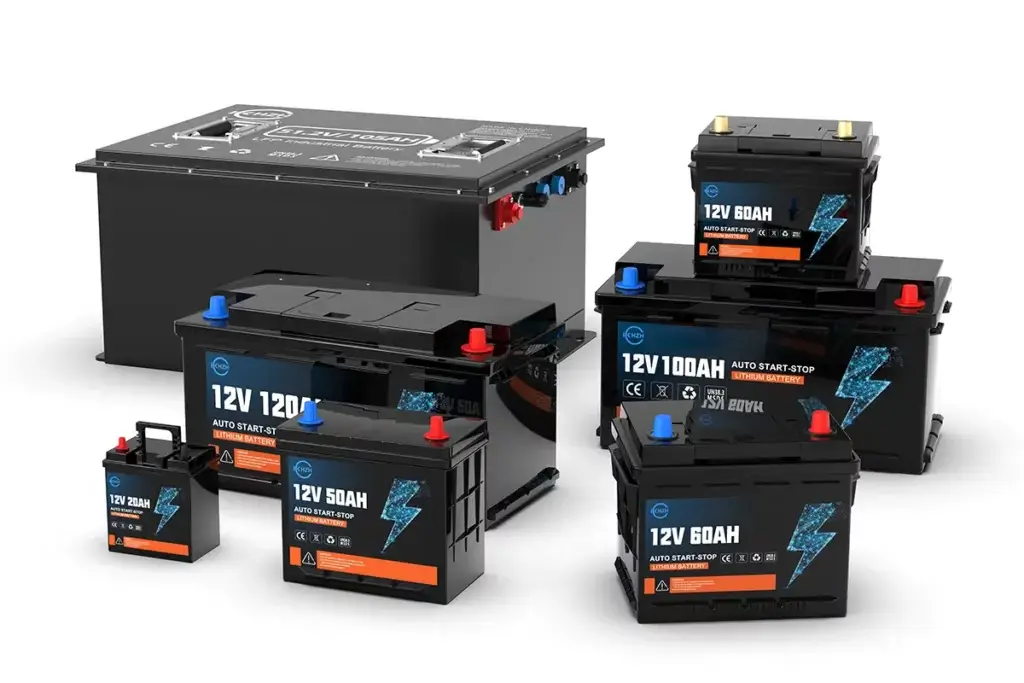
Over the past decade, the role of the server rack battery has changed in a fundamental way. It is no longer just a “backup power” unit sitting behind a UPS. Today, it stays online for long periods and must deliver stable, predictable, and scalable performance.
This shift is hard to ignore. In data centers, telecom rooms, and hybrid energy systems, the battery has become a core subsystem. When it underperforms, the impact spreads across the entire system.
Yet many projects still make battery decisions based on a few surface-level questions. Is the capacity high enough? Is the price low enough? Do the specs look stronger on paper? These questions are understandable, but they are not enough to identify the Best Server Rack Battery for a real-world project.
That is the purpose of this article. I am not here to repeat long spec sheets. Instead, I want to turn insights from 16 years in the lithium battery industry into a practical decision framework. One that helps you match technical requirements with long-term business goals, and choose a solution that truly fits your system over time.
Core Advantages
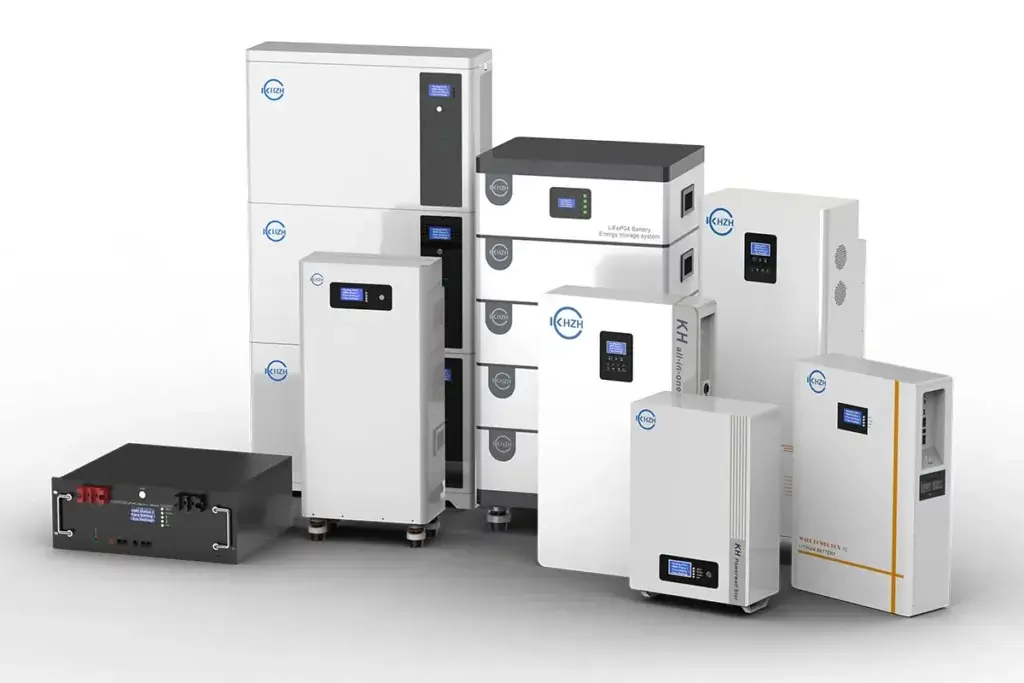
Server rack batteries are built for standard rack environments. The goal is clear. They act as a standardized subsystem inside data centers and power systems, not as add-on hardware.
System Integration
A server rack battery follows the 19-inch rack standard and uses modular height measured in “U”. Because of this, it fits naturally with servers, UPS units, and power cabinets.
As a result, everything shares one system layout. Space planning becomes cleaner. Daily operation follows the same interface and logic.
Deployment and Maintenance Efficiency
Rack batteries are installed on cabinet rails and use plug-and-play connections. This significantly shortens on-site installation time. More importantly, the modular design supports hot swapping. You can replace a battery module without shutting down the whole system.
At the same time, expansion stays simple. As your load grows, you add battery modules in parallel. Capacity scales smoothly and linearly.
This is a key reason many operators see the Best Server Rack Battery as a long-term system choice, not a short-term fix.
Standard Communication Interfaces and Protocols
From the start, server rack batteries come with a built-in BMS and standard communication ports. This allows them to connect directly to existing power and monitoring systems. Platforms such as DCIM or building management systems can monitor and control each battery module in real time. Nothing feels forced. Everything works within the same control structure.
Cell Chemistry and Safety
When you choose a server rack battery, safety starts at the cell level. Cell chemistry sets the baseline for the entire system.
Today, most projects move toward LFP cells. There is a reason for that.
Thermal Safety
Let’s compare the two common options.
NMC cells use a layered structure. This structure becomes unstable at high temperatures. Thermal runaway starts earlier, so the system depends more on advanced BMS control and active thermal management.
LiFePO₄ (LFP) cells use an olivine structure. It stays stable under heat. Thermal runaway begins at a much higher temperature, and the reaction is slower and less aggressive. This difference matters in real operations.
Cycle Life
Modern LFP cells can exceed 6,000 cycles at 80% depth of discharge (DOD). Under the same conditions, NMC cells usually reach about 3,000 to 4,000 cycles.
Server rack batteries often charge and discharge every day. In this use case, longer cycle life means fewer replacements over the project lifetime. That directly lowers total cost. This is why LiFePO₄ is often the safer long-term choice.
Battery Management System (BMS)
Even with the safest cells, a strong BMS is still essential. It runs 24/7 and watches every single cell. The BMS tracks voltage and temperature in real time.
It enforces protection against overcharge, over-discharge, and over-temperature. It also balances cells to keep the pack stable over time. In short, the BMS turns cell-level safety into system-level reliability.

Environmental Adaptability
Battery performance depends heavily on the working environment. Too much heat speeds up aging. Too much cold can block charging or cut usable capacity. You need to check both charge and discharge temperature ranges.
For example, a battery may discharge from −10°C to 50°C, but only allow charging between 0°C and 45°C.
Ingress protection also matters.
- Indoor use (such as data centers): IP20 is usually enough. It protects against finger contact but offers no special dust or water protection.
- Outdoor use: IP55 is common. It protects against dust and low-pressure water jets. In harsher sites, IP56 or higher helps keep internal electronics safe.
Key Safety Certifications
For large or high-end projects, certifications are often non-negotiable. They reflect the highest safety thresholds in the industry.
- IEC 62619: Global safety standard for industrial lithium batteries
- IEC 62040: Standards related to UPS systems
- IEEE standards: Guidelines for safe energy storage system design
- UL 9540A: One of the strictest fire safety tests for energy storage systems
- UL 9540: Electrical safety for battery energy storage systems
- UL 1973: Safety standard for stationary energy storage and auxiliary power batteries
- UN 38.3: Transport safety certification under extreme conditions
Planning Power and Capacity
In real projects, battery sizing often goes wrong in a few common ways.
Mistake 1: Adding up nameplate power. Many teams simply sum the maximum rated power of each device. This number looks safe, but it is far higher than the real operating load. The result is an oversized server rack battery system.
Mistake 2: Ignoring load dynamics. Power demand changes with workload. If you size the battery only on average load, backup time can drop fast during peak hours.
Power Requirements
Start with power, not capacity.
- Continuous power (kW): This defines whether the system can carry daily loads in a stable way.
- Peak power (kW): This defines whether the system can handle switching events and short power spikes.
The right battery must meet both. Continuous power must cover normal operation. Peak power must absorb startup and transient impact. Only then does the system feel reliable.
Next comes choosing the right capacity for the lithium battery. Vendors usually list an initial rated capacity. However, you should also ask about expandable capacity from day one.
Accurate Capacity Sizing
Now move to real numbers.
- Measure actual load power (kW): I recommend using a clamp power meter at the distribution cabinet. You can also pull load curve data from smart PDUs or UPS output monitoring over a set period, such as 24 hours.
- Define required backup time (hours): Backup time is not a guess. It depends on your recovery time objective (RTO), generator start and transfer time, and local grid reliability.
- Calculate and adjust:
Required battery energy (kWh) = Actual load power (kW) × Backup time (h)
But don’t stop there. You must account for inverter DC-to-AC efficiency and battery depth of discharge limits. In real systems, you also plan for future growth and design redundancy, not just today’s load.
The final formula looks like this:
Total battery capacity (kWh) = (Load power × Backup time) / (Inverter efficiency × Maximum DoD)
- Design margin: This structured approach helps you avoid both overdesign and underprotection. It also brings you closer to choosing the Best Server Rack Battery for your system, not just the biggest one on paper.
System-Level Expansion and Integration
In enterprise projects, the real value of a server rack battery shows over time. What matters is whether it fits into your existing power architecture and keeps working as the system grows.
Voltage Platform Selection
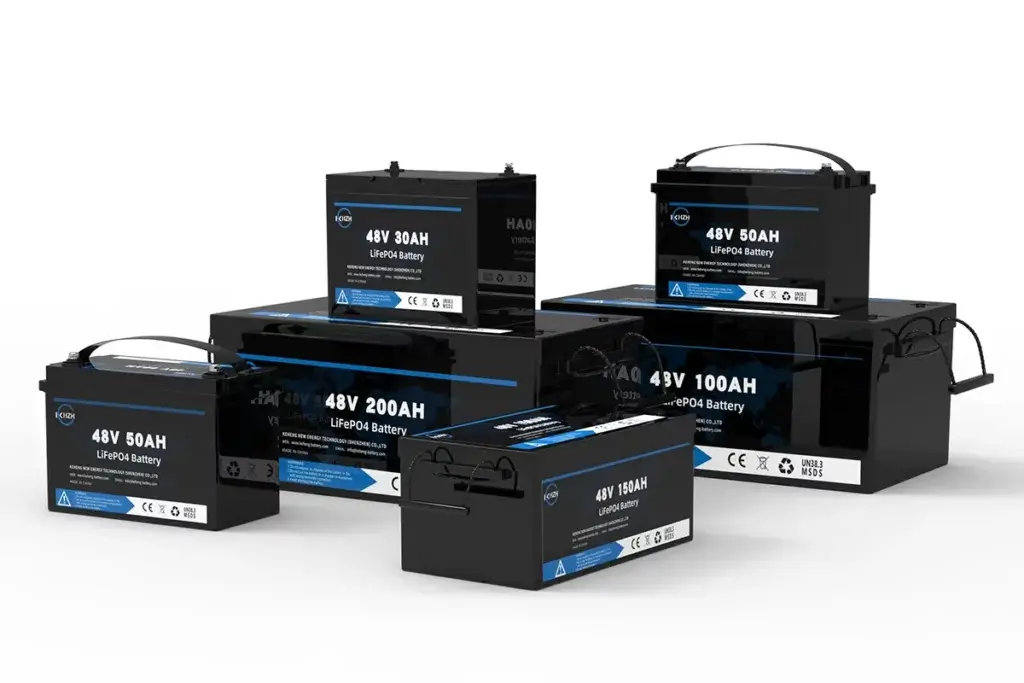
Take a 51.2V LiFePO₄ system as an example.
- Check the battery’s full charge voltage (about 58.4V) and discharge cut-off voltage (about 48V).
- Then compare this with the “DC input voltage range” in your UPS or inverter datasheet.
For example, if the device accepts 40–60V, the battery stays within a safe range at all times. But if the range is 48–56V, the system may trigger undervoltage protection at a low state of charge. The battery still has energy left, but the system disconnects it. Backup time gets shorter.
Beyond the common 48V / 51.2V platform used in data centers and small-to-medium power systems, there are also 240V high-voltage and special custom voltage options. You should assess these based on real project needs, not trends.
Parallel Expansion Capability
A parallel connection alone is not enough. If it only works at the electrical level, risk grows as you add more modules. This checklist helps when you evaluate suppliers.
- No master–slave design: Ask if the system truly runs without a master unit. If one module goes offline, do the others keep working normally? Or is there a hidden master?
- Circulating current control: Ask how the system limits circulating current between parallel modules. What design limits are in place?
- Expansion process: Ask about the exact steps for online expansion. Can you insert a new module while the system is running? Or does it require a shutdown and restart?
Modular design only delivers value when expansion stays controlled.
Communication Protocols and BMS
Server rack batteries usually support these interfaces:
- CAN / RS485: Used for real-time data exchange with inverters, UPS systems, or rectifiers. This is the base layer for power control.
- Modbus (RTU / TCP): An industry standard for connecting to room monitoring systems or EMS platforms. It supports centralized monitoring, data logging, and alarms.
- Dry Contact: A hardware-level signal used for fire system linkage or audible and visual alarms.
The BMS does more than protect the battery.
It can:
- Send accurate, readable data to upper-level systems
- Receive and execute control commands or operating limits
- Keep data and response timing aligned across multiple parallel modules
Only when communication stays consistent across batteries, inverters, UPS systems, and monitoring platforms can the system correctly read status, alarms, and control logic. That is how the system manages each module with precision.
Remote Monitoring and Centralized Management
All of this depends on stable and compatible communication. With a centralized platform, operators can:
- Track real-time operating status
- Perform remote diagnostics and respond to alarms
- Update firmware and adjust control strategies
For multi-site deployments, telecom rooms, and distributed systems, these features often determine long-term operating cost.

Installation and Serviceability
Even the best battery fails if you cannot install or maintain it.
Installation checklist:
- Load capacity: Multiply the single-module weight (for example, 45 kg) by the planned quantity. Then confirm floor load capacity, often ≥1200 kg/m².
- Airflow design: Check whether the battery uses front-to-back airflow. Confirm it aligns with servers in the same rack. Also, verify airflow volume and match it with cooling capacity.
- Cable space: Estimate the number and thickness of power and communication cables. Make sure side cable channels allow the rack doors to close properly.
Serviceability design points:
- Front access: Front-service design allows full installation and maintenance from the front, even when racks sit against a wall.
- Module replacement: Confirm true hot-swapping. A faulty module should isolate and be removed without cutting power, while the system rebalances itself.
- Indicators and ports: Status lights, communication ports, and emergency switches should stay visible and reachable. You should not need to pull the unit out just to check the status.
These details rarely appear on a spec sheet. But after years of operation, they create clear cost gaps between different solutions.
Evaluating Long-Term Value and Total Cost of Ownership (TCO)
This is the key economic metric when choosing the Best Server Rack Battery. Upfront price alone does not tell the full story.
The total cost includes more than the first purchase.
- Initial purchase and installation
- Energy loss during operation
- Maintenance and inspection
- Risk of failure and downtime
- End-of-life disposal or residual value
Only when you look at all of these together can the cost make sense.
A Simple TCO Model
You can express TCO in a clear, practical way:
Annual equivalent cost = (Total initial cost + Total operating and maintenance cost − Residual value) / Expected service years
The most important variable here is expected service life. That depends on how the battery ages over time.
The Two Aging Mechanisms of Batteries
Battery aging follows two main paths.
- Cycle aging: This comes from charge and discharge cycles. One full charge followed by one full discharge equals one cycle. Figures like “6,000 cycles at 80% DOD” come from lab tests under fixed conditions.
- Calendar aging: This comes from time itself. Even when a battery sits unused, internal chemical reactions slowly reduce performance.
Lithium batteries, especially LiFePO₄, show longer cycle life and lower calendar aging rates. You can often see this reflected in warranty terms. For low-use applications, a longer time-based warranty makes sense. For high-use systems, a warranty that guarantees higher cycle counts is usually the better fit. In the end, TCO is not about buying cheaper. It is about spending less over the life of the system.

Scenario-Based Selection Strategy
There is no single battery that fits every case. To choose the Best Server Rack Battery, you must start with the application. Deployment environment, load behavior, and business goals all shift the priorities.

Data Centers and Server Rooms
These sites demand fast response and high stability.
- High power and fast response: The battery must support high continuous discharge rates (C-rate ≥ 1C). During the UPS transfer, it must carry the full server load instantly. Voltage must stay within tight limits.
- Space and deployment density: Rack-mounted design improves space efficiency. It supports high-density installation and simplifies centralized maintenance.
- System compatibility: The battery must work smoothly with UPS systems, power distribution, and monitoring platforms. Standard protocols such as CAN, RS485, and TCP are essential.
- Lifecycle cost: Long cycle life and strong warranty terms reduce future maintenance and replacement costs. This directly lowers TCO.
Telecom Base Stations and Edge Sites
These sites are often spread out, harsh, and unmanned.
- Wide temperature range and high protection: The battery must operate from −20°C to +55°C, or even wider. At least IP55 protection is needed to handle dust, condensation, and rain in outdoor cabinets.
- Grid adaptability: Frequent grid fluctuation and short outages are common. The battery must handle shallow charge and discharge well. Here, calendar life matters more than pure cycle count.
- Remote management: The BMS must support remote batch settings, firmware updates, and detailed fault logs. This allows control centers to find and fix issues faster.
Solar + Energy Storage Systems
These systems aim to raise self-consumption, cut energy bills, and keep off-grid operation stable.
- High cycle life and deep discharge: Daily charge and discharge are normal. More than 6,000 cycles at 80% DoD should be the baseline.
- Deep protocol compatibility: The battery must “talk” clearly with hybrid inverters such as Deye, GoodWe, and SMA. Stable CAN or RS485 communication allows smooth switching between peak shaving, backup power, and off-grid modes.
- System scalability: Many projects start small. The battery should support simple and low-cost parallel expansion as demand grows. Context drives choice.
Conclusion
Choosing the Best Server Rack Battery is not about a single spec. It depends on multiple factors, and each application weighs them differently.
- Safety as the foundation: Start with LiFePO₄ cells. Pair them with a robust BMS and trusted certifications, like UL 9540A. This is your shield against thermal or electrical risk.
- Insight into real demand: Measure actual load. Calculate capacity carefully. This avoids wasted investment and ensures backup power is sufficient.
- Respect for system integration: From millivolt-level voltage matching, to byte-level protocol alignment, to a millimeter-precise physical layout. The battery should fit seamlessly, not be forced into the system.
- Validation through long-term value: Look through the lens of TCO. Consider more than the price tag. Think about reliable service over 10+ years and sustainable partnerships.
If your project demands high reliability, long-term stability, and flexible expansion, reach out to our engineering team today. We provide tailor-made server rack battery solutions to optimize system performance under real load and reduce long-term operating costs.